
Pool Construction Guide
So What Is Gunite?
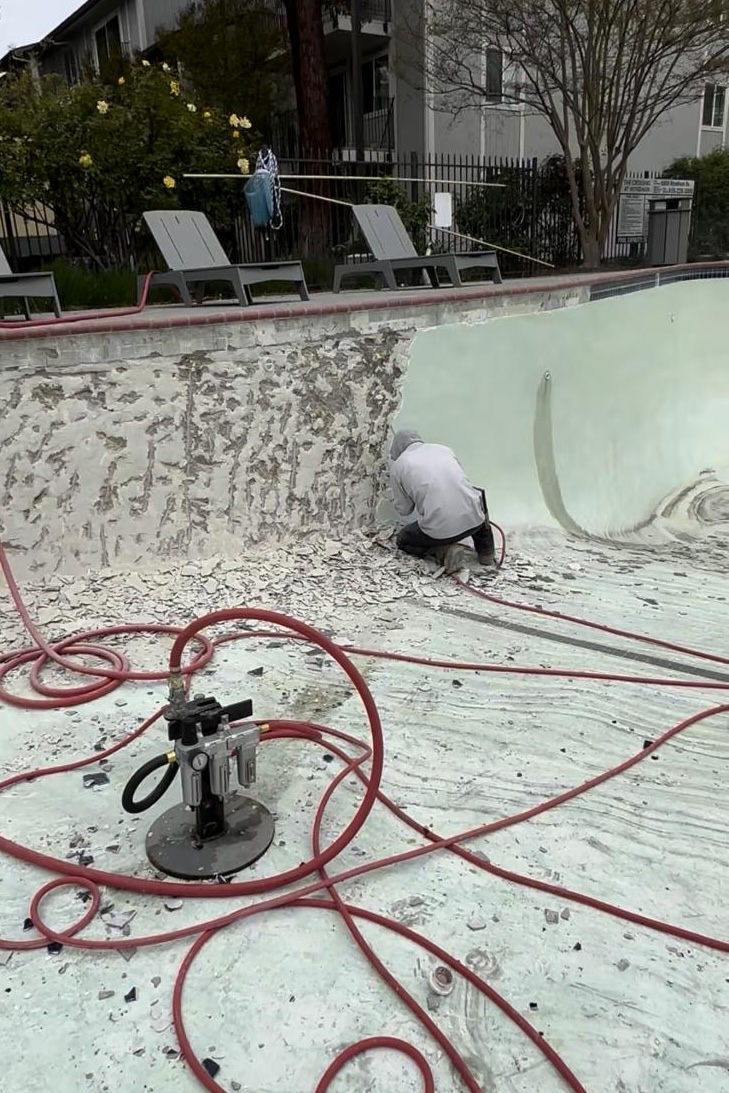
Gunite Overview
As you look into building a new backyard pool, you will probably come across the word “gunite.” The source article describes gunite as a mixture of sand, cement, and water applied through a pressure hose to form a hard concrete layer commonly used for swimming pool walls. According to the source article, gunite is often referenced as one of the more durable pool construction materials available today.
Gunite in Pool Construction
The source article describes gunite pools as known for design flexibility. According to the source, gunite has been a common material in pool construction, where it is often paired with steel reinforcement.
After excavating the hole for a new pool, the source article describes a network of steel bars being placed at intervals to form a cage-like frame that covers the entire pool. The source notes that extra steel bars may be used on the deep end of the swimming pool for additional reinforcement, and that the cage is generally suspended to create space for the gunite to fill.
Next, the source article describes gunite being sprayed at high pressure across the pool to form the wall and pool floor. After the gunite cures, plaster is then applied. The source describes plaster as the smooth surface seen on the walls and base of the pool.
Why Gunite Is Used in Pool Construction
The source article describes several reasons gunite is often used in pool construction. Actual outcomes will depend on the project, the crew, and local factors.
Adaptability
According to the source article, gunite can adapt to different custom pool shapes, contours, and depths, which gives designers flexibility from curves to sharper angles.
Strength and Durability
The source article notes that gunite forms a solid structure that may last for years once sprayed and cured. Specific durability will depend on construction quality, materials, and ongoing maintenance.
Aesthetics
The source describes gunite’s versatility as part of why it is often associated with visually distinctive pools, with shapes that can fit a wide range of design ideas.
Track Record
According to the source article, gunite has a long-standing track record as a pool construction material in residential and commercial settings, including hotels and restaurants.
What Is Shotcrete?
The source article notes that gunite and shotcrete are both forms of concrete. The main difference described by the source is in how they are mixed. Gunite is a dry mix that has water added at the construction site, while shotcrete is pre-mixed before reaching the job and generally includes gravel that gunite does not have.
Gunite vs Shotcrete
The source article also describes a difference in how the two materials are handled during pool construction. For gunite, sand and cement are brought to the job site and held in a container before being fed into a mixing system. The mixer feeds the dry gunite into a high-pressure hose, where it is mixed with water before being applied to the steel cage.
For shotcrete, the source article describes a mix of cement, pea-sized gravel, and sand that is loaded into a truck with a rotating barrel. The barrel adds water and mixes the materials so the shotcrete is ready for use when the truck reaches the construction site.
The source article notes that the terms gunite and shotcrete are sometimes used interchangeably because they offer similar qualities in pool construction. Some builders may prefer gunite depending on the project and local factors. A pool professional can help evaluate options for your build during the pool building process.
Questions About Gunite Pool Construction?
Contact Sac Pool Pros to discuss gunite pool construction, pool finishes, and design options for your Sacramento area backyard project.